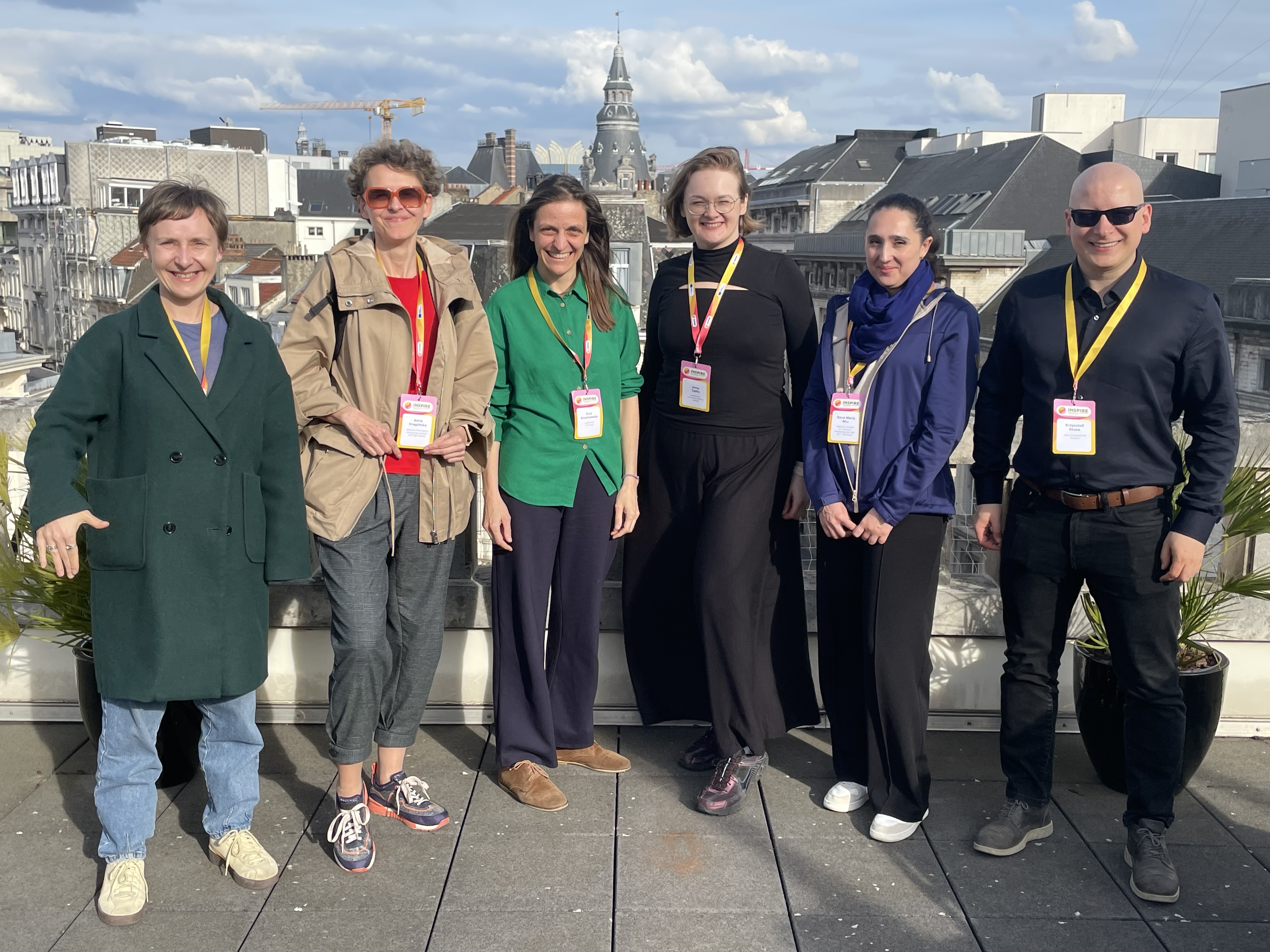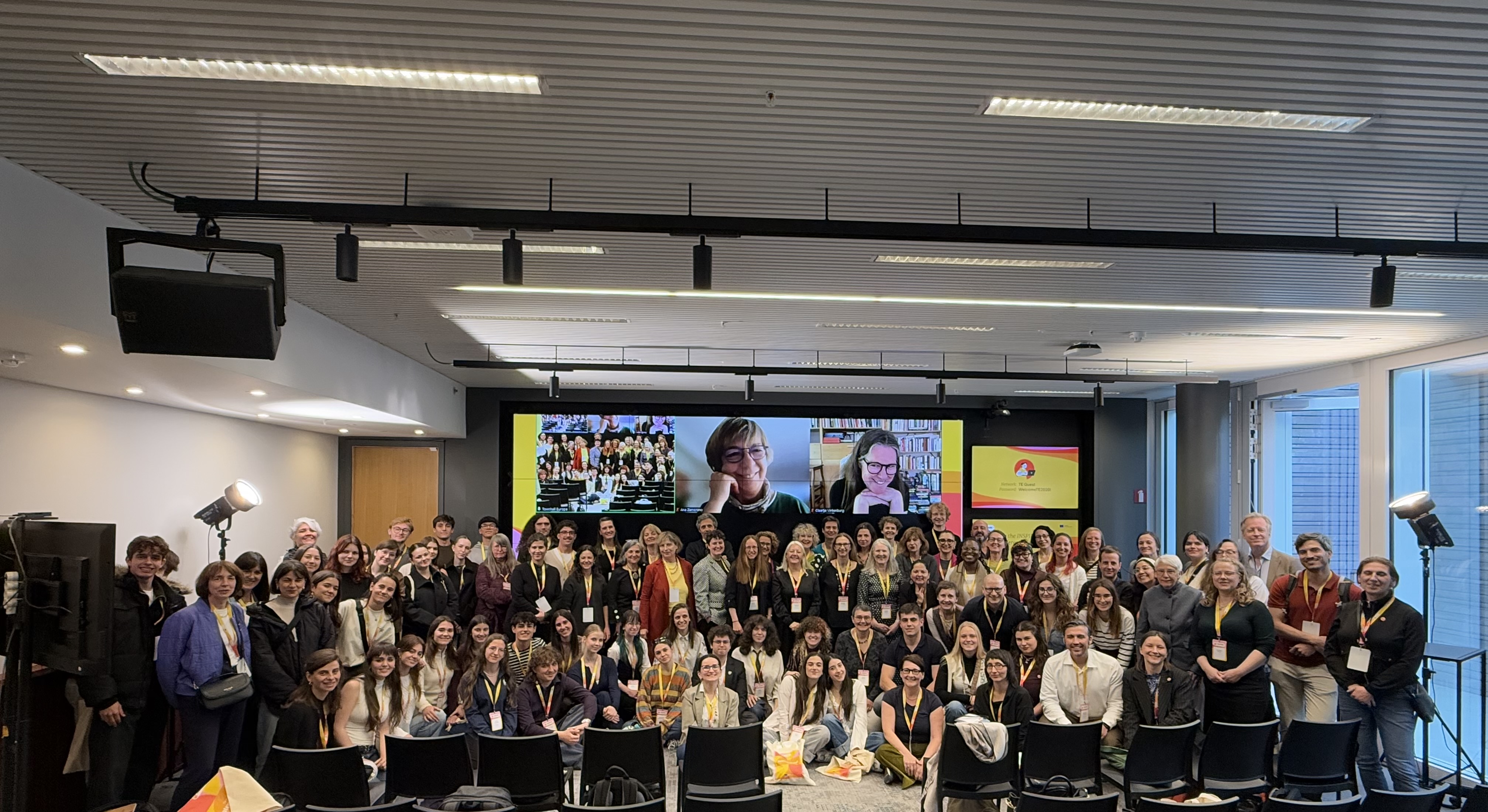
The dust has now settled over what has been a truly fantastic event: our second conference, which took place in Brussels, on 16-17 April! We've had close to 150 participants in the two days combined, both on-site and online, and we have come to feel the power of community: the success of this event would not have been possible without the active involvement of our participants, be they our colleagues in the consortium, our Advisory Board members, representatives from our Communities of Practice and our sister projects, friends and followers of the project, and guests from the European Commission and national bodies whose presentations and interventions enriched our discussions.
The event featured multiple panel discussions, in which the centre of gravity went from evidence to practice and ultimately, to policy. These panels spotlighted our key research results (the evidence base), the lessons our Communities of Practice have gained from their collaboration and knowledge exchange (the practical experience), and what we can expect looking forward (the policy aspects). Key takeaways include:
- We need to design tailored solutions to complex ecosystems that differ greatly across political, cultural, and organisational contexts. There is no single way to advance inclusive gender equality in every single country and institution in Europe and Latin America; national and local contexts play a major role.
- To achieve this, we need to empower those driving changes and equip them with the right tools. Our Support Packages, for example, and Open Training Units, provide this structured support that might come in handy. But tools alone aren't enough - researchers need proper funding to conduct their work to the best of their abilities, whereas practitioners need the right platform for reflection and experimentation, that could lead to better strategic decision-making at organisational level.
- An intersectional perspective is a prerequisite for scientific excellence and research that reflects the vast array of experiences one encounters in the real-world.
- Resistance and backlash are becoming more prominent as the political landscape shifts to the right in many countries around the globe; to tackle these challenges, coming together and learning from each other is paramount. Patrizia Zanoni, our colleague at Hasselt University, advances the idea of "infrastructures of change" for genuine systemic change.
- The research, resources, and lessons EU-funded projects, just like ours, produce feed into the EU R&I policy, and legal instruments such as the proposed ERA Act are designed to strengthen and advance inclusive gender equality, and explicitly address intersecting inequalities that can negatively impact researchers coming from minoritised groups.
We are grateful to those of you who joined our event and we're looking forward to staying in touch. If you couldn't attend, but would be curious to check out the presentations, you'll find links below:
- Opening Statement by Rachel Palmén (Open University of Catalonia), INSPIRE coordinator
- Mapping Inclusive Gender Equality Plans Throughout Europe: Survey & Web Scraping Key Findings by Mazlum Karataş, Dr. Andrea Löther, Dr. Lena Weber (GESIS Leibniz Institute for the Social Sciences)
- Achieving Impact with Gender Equality Plans. Six facilitating factors & a model for change by Jörg Müller (Open University of Catalonia)
- Traces of intersectionality: Key findings on intersectional equality policy-making in Higher Education & Research organisations by Joanna Yasmina Marie Beeckmans, Prof. Dr. Patrizia Zanoni, Prof. Dr. Koen Van Laer (Hasselt University)
- Integrating the gender dimension into research and innovation content. Inclusive Gendered Innovation (IGI) by Helene Schiffbänker (Joanneum Research)
- Inclusive Gender Equality: Main policy lessons from INSPIRE by Rachel Palmén (Open University of Catalonia), INSPIRE coordinator
- Inclusive Gendered Innovation (IGI): What is needed now? by Helene Schiffbänker (Joanneum Research)
- Principles for Inclusive Gender Equality by Paola Chaves, Yvonne Benschop (Radboud University)
- Where do we go from here? by Rachel Palmén (Open University of Catalonia), INSPIRE coordinator, and Lorena Pajares Sánchez, Notus