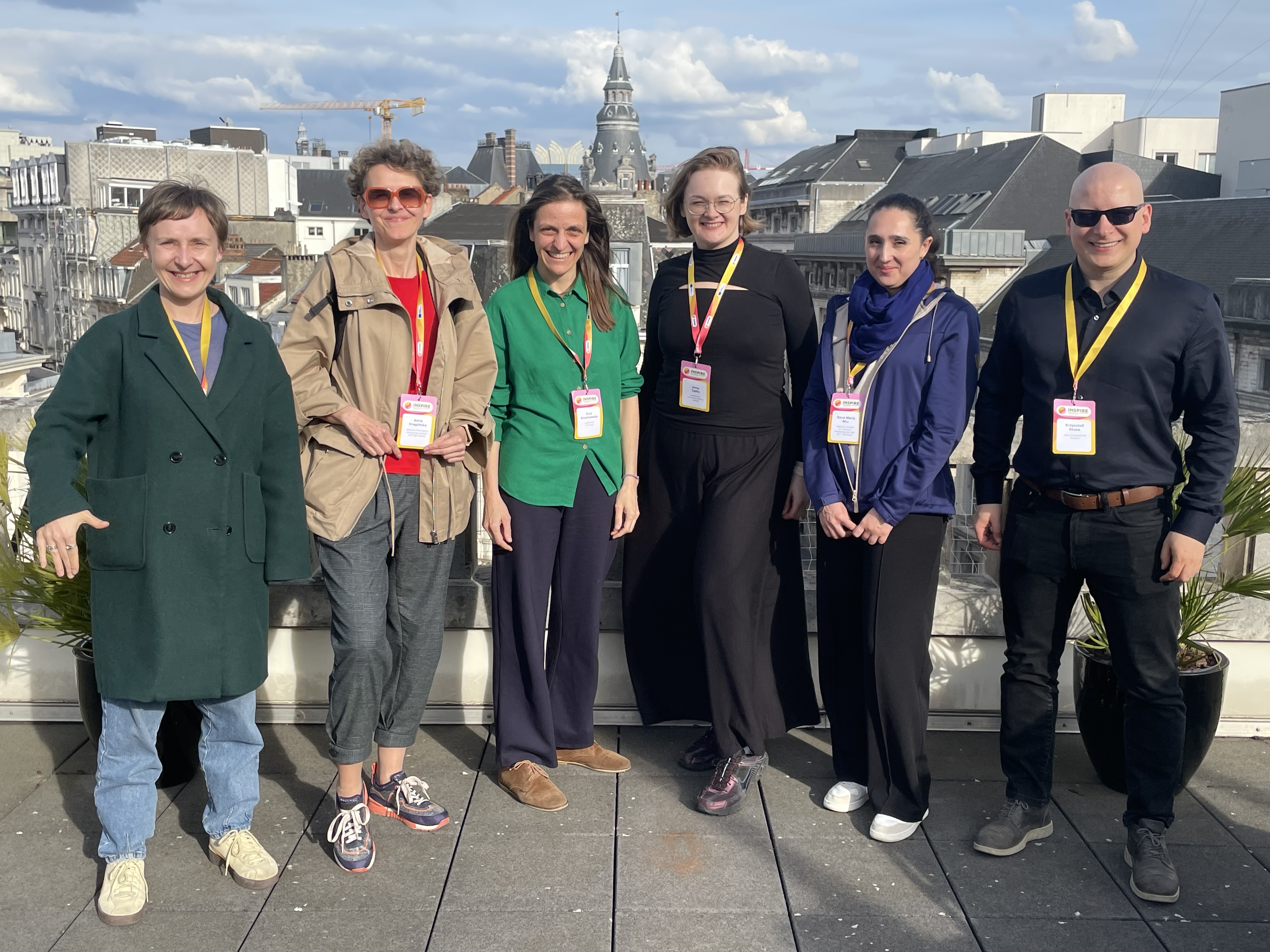
In our seventh Unplugged Dialogue, we had the great pleasure of interviewing two guests and friends of our project: Prof. Dr. Dounia Bourabain (School of Social Sciences, Hasselt University) and Dr. Maria Sangiuliano (Research director and partner at SmartVenice and project coordinator of INCLUDE).
It was a rich conversation that explored how intersectionality can move from theory to practice within gender equality policies (or EDI policies, more broadly). The speakers stress that intersectionality moves gender equality work from a binary focus on "men and women" to a layered perspective that analyses how gender intersects with other factors, like ethnicity, race, class, age, disability, religion, sexual orientation, and gender identity. This is particularluy important because conventional equality measures can end up benefitting groups already closer to positions of power.
What are the challenges to embedding intersectionality into current policies and practices? Our guests highlight the limited leadership engagement, lack of resources and expertise, weak intersectional data collection, disciplinary resistence, and broader anti-gender and anti-EDI movements. In biomedical and other "hard" sciences, supposedly neutral concepts such as merit, excellence, and objectivity can make structural inequalities harder to recognise.
The discussion also emphasises the importance of intersectional data. Rather than simply counting women and men, organisations whould examine how different groups progress through processes such as recruitment, promotion and career exits, combining quantitative data with qualitative research to understand the reasons behind inequalities.
Finally, the speakers argue that intersectionality should not remain an additional or voluntary activity. Sustainable institutional change requires leadership commitment, dedicated resources, and the integration of intersectionality into everyday practices - including recruitment, promotion, leadership selection, workload allocation, research evaluation, and teaching. At the same time, bottom-up alliances, solidarity, and participatory approaches can help create resistance to the growing backlash against equality work.
You can listen to the interview on our channels:
______________________________
The INSPIRE Unplugged Dialogues is a podcast series where we sit down with gender equality experts, be they academics, researchers, or practitioners, and we discuss issues related to gender, (in)equalities, diversity and inclusion, intersectionality, feminism, and more.