
In this INSPIRE interview, Dr. Dagmar Simon, Member of the Scientific Board of the INSPIRE project, reflects on the conditions needed to support inclusive gender equality. Her perspective draws attention to the role of international cooperation, institutional accountability and the ways in which research systems define and reward achievement.
From 2008 to 2016 Dagmar Simon headed the research group Science Policy Studies at the Berlin Social Science Center (WZB), with a research focus on evaluation research, sciency policy studies and gender studies. Since October 2016 she is director of "EVACONSULT - Evaluation, Research, Consulting" and guest researcher at the WZB. She was a member of the Interdisciplinary Working Group "Excellence Initiative" of the Berlin-Brandenburg Academy of Sciences and Humanities from 2008 to 2018, was for a long-time member of the working group "Research-oriented standards" of the German Research Foundation (DFG), co-initiator and member of the "European Network for Research Evaluation in the Social Sciences and Humanities" (ENRESSH). Since 2023 she is Chair of the Board of Trustees of the University of Applied Sciences (HTW), Berlin, since 2024 the Vice Chair of the Board of Trustees of the Humboldt University Berlin and member of the Board of Trustees of the Technology Foundation Berlin.
Gender Equality in a Changing Environment
Discussions about gender equality in research are increasingly influenced by broader political and social developments. Simon points to the importance of strengthening collaboration across borders and sectors in response to these shifts.
Q: Looking ahead 10–20 years, what major cultural or structural changes are necessary to achieve inclusive gender equality in research and innovation?
DS: “In view of current attacks on (gender) research, equality and diversity policies, it is important to strengthen international exchange and networking within and between social sectors. New global and European alliances supported with resources are necessary to meet these challenges.
At the national level, a high-level steering group with an international composition and a strong reputation (example: Athena Swan) should take on the continuous monitoring and evaluation of equality and diversity policies. Through regular reports and publicly effective recommendations, a learning governance is established that closely links political action and institutional practice.”
The way research systems define achievement has a direct impact on inclusion. Simon highlights the limitations of current approaches and the need to recognise a broader range of contributions.
Q: How should institutions rethink or redefine concepts such as “excellence” and “merit” to make them more inclusive?
DS: “The problem with the concept of excellence, which has been circulating in the scientific systems for about 20 years, is that it is one-sidedly equated with excellent research, which in turn is 'measured' by articles in international peer-reviewed journals. It is always emphasized that teaching and transfer are also very important performance dimensions of universities. However, we still find a reputation hierarchy. This is also a problem in the assessment of gender dimensions in science. At least it has been achieved that gender policies and excellent research are no longer in opposition. To make concepts such as “excellence” and “merit” more inclusive it is necessary to dismantle the implicit hierarchies of the reputation system in science and to clarify what significance and status gender equality holds in the system, preferably supported by clear indicators.
Barriers within research careers remain a key concern. Simon emphasises the importance of creating more flexible and accessible career pathways.
Q: What long-term strategies do you believe are most effective for addressing entrenched biases across the research career pipeline?
DS: “Scientific careers must become more permeable – across national borders, but also between companies and academia. They should be equally accessible to all genders. To promote this, more studies on scientific career paths and the retention of postdocs are needed.”
Attention then turns to how equality policies are implemented within organisations. Simon points to the need for closer alignment between different parts of institutional management.
Q: In your view, what institutional structures are missing or underutilised that could enable fairer recruitment and career progression pathways?
DS: “Gender and diversity policies must be much more strongly integrated into the personnel policies of scientific institutions. This requires regular exchange and cooperation between the equality offices and those responsible in the human resources departments.”
The Role of Leadership
Institutional leadership plays a central role in shaping priorities and ensuring that commitments translate into action.
Q: If you could redesign one aspect of institutional culture to foster justice and inclusion, what would it be and why?
DS: “Holding the leadership of scientific organizations accountable. Their institutions should become engines of sustainable change by designing missions with an equality orientation, developing goals for their respective institutions, and providing the tools for implementation. The leadership should be measured on implementation and achievement of goals, and the allocation of financial resources should be conditioned accordingly. Such context-specific governance increases accountability and anchors equality objectives in the reputation field of excellent science.”
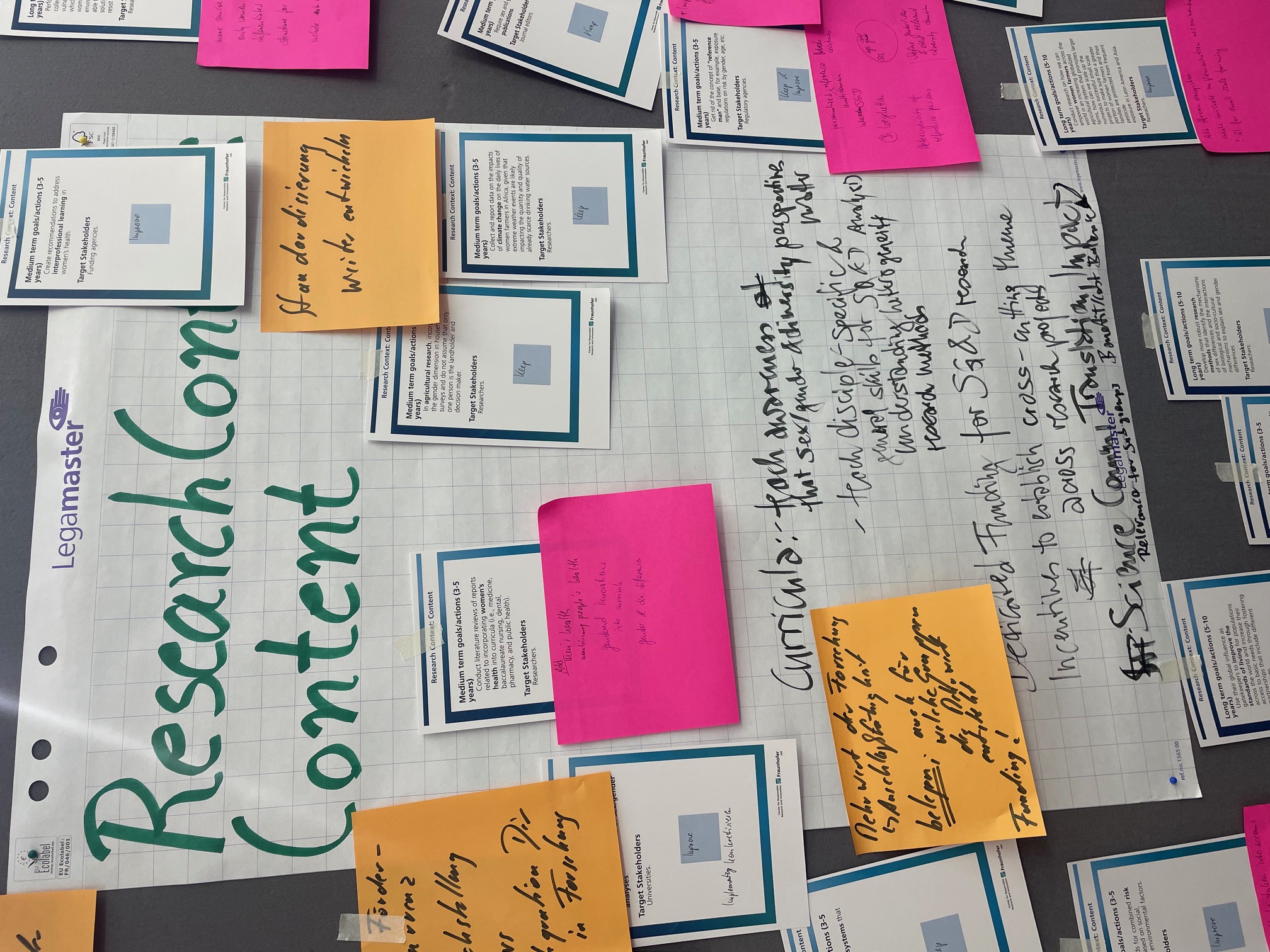
Alongside formal structures, everyday practices and behaviours also shape institutional environments.
Q: From your own experience, can you share one concrete action or practice that you or your team have implemented to reduce bias or promote gender equality in research and innovation?
DS: “What is crucial is the ‘culture’ that is exemplified by the leadership of scientific organizations. This can significantly influence a university or research institution.”
In closing, Simon connects gender equality in research to wider societal priorities and long-term sustainability.
Q: Is there anything else you believe would help accelerate meaningful progress toward inclusive gender equality in research and innovation?
DS: “From a long-term perspective, the future viability of gender equality must be more strongly linked to the future viability of society (or societies) – for example, with reference to sustainability goals – and their democratic constitution. In an equality-oriented research landscape, this means taking gender perspectives into account not only in basic research but also in the transfer and application of innovations.
Equality policies must be embedded in the European research area. For example, the EU guidelines for strengthening the valorization of knowledge are essential to advance equality. This also increases the social and economic value of research and innovation.”
Across the discussion, Simon highlights that progress depends on sustained attention to both structure and practice. Integrating equality into governance, career systems and institutional culture remains central to building research environments that are both inclusive and resilient.