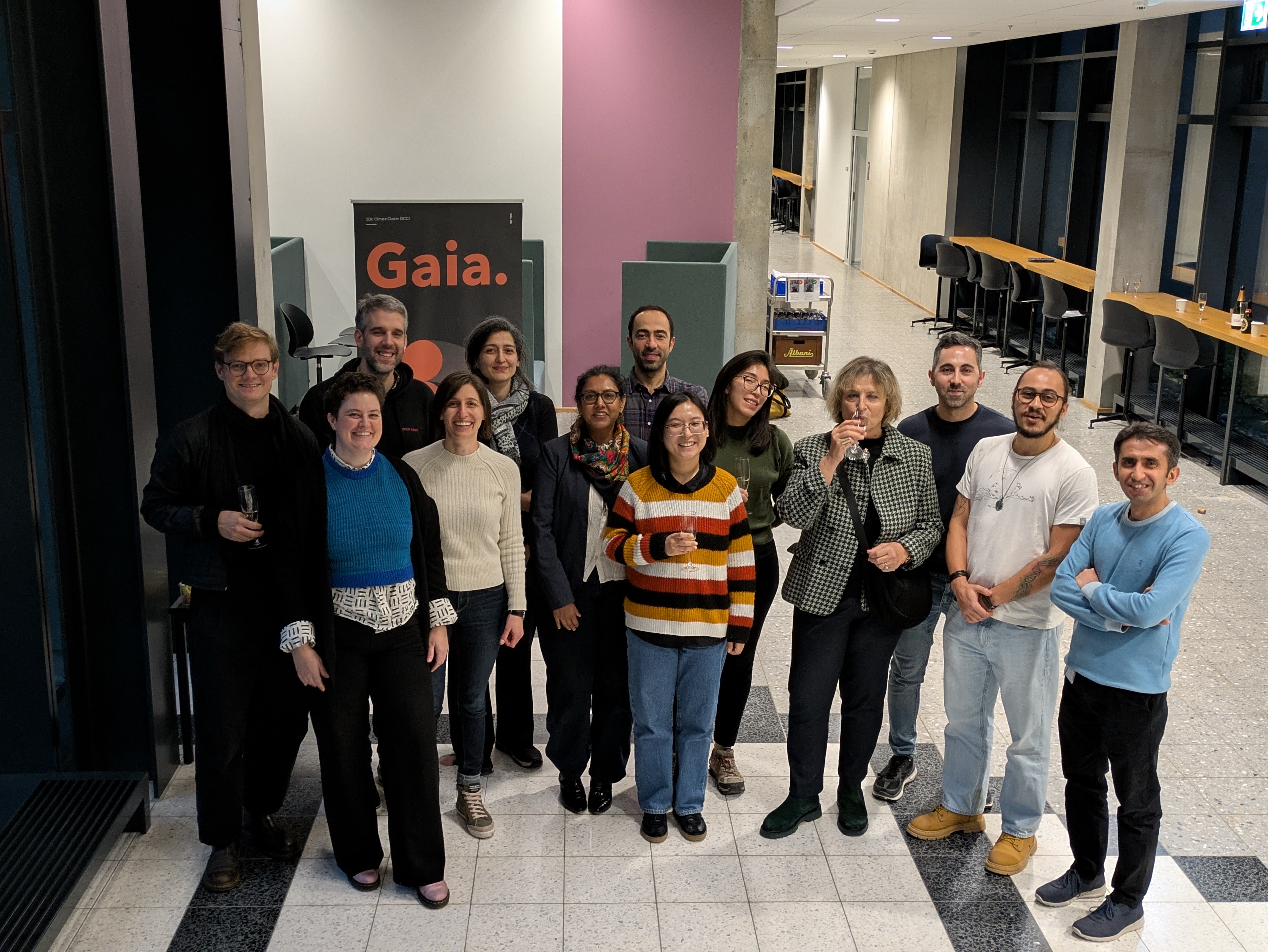
On 19th November 2025, the Gaia CoP was involved in an inspiring afternoon discussing the importance of including an intersectional gender dimension in environmental research and innovation. In a session titled 'Unlocking potential, Ensuring Inclusion: Why Gender and Diversity Matter in Environmental Research and Innovation' we heard from two leading experts in environmental research who presented their considerations in regards to gender and intersectionality when confronting climate change and its effects.

Dr Vasna Ramasar, from Lund University, began the conversation by highlighting how the effects of climate change are gendered, raced and classed. She included a focus on the different ways in which women from the majority world are affected by climate change, but also how they are at the forefront of the fight for environmental justice.

Emerita Prof Anastasia Zabaniotou, from Aristotle University of Thessaloniki, shared her extensive experience with gender in technological innovation and the EU policy landscape to highlight some of the fallacies of mainstream technological innovation and how these can be redressed. She presented her vision for ‘socio-technical transitions’, which call for changes in established ways of thinking (culture) of doing (practices) and organising (structures).
We chose Vasna and Anastasia to represent the multidisciplinarity of our CoP members. It was a pleasure to discover, instead, the multiple overlaps between their STEM and SSH perspectives. They both highlighted the gendered aspects of extractive economies and how the 'masculinity' of mainstream innovation has contributed to climate change and environmental degradation. They also encouraged us to take a post-humanist/post-anthropocentric approach to science and technology, to see the profound entanglements of humans with the environment and other, non-human, animals. Lastly, they both stressed the need to enact a 'politics of care' towards the world and towards each other, to recognise the different vulnerabilities in the face of climate change and environmental disaster and to include them in our research and innovation projects.
Ultimately, the day was a great example of how gendering environmental research and innovation is not only necessary, but can actively lead to better, more original research ideas, innovations and societal impact. We are grateful to INSPIRE for giving us the opportunity to meet and learn from one another; this is only the beginning of a long and productive conversation across disciplines and geographical locations.


