By Iris Rittenhofer and Ella Fegitz
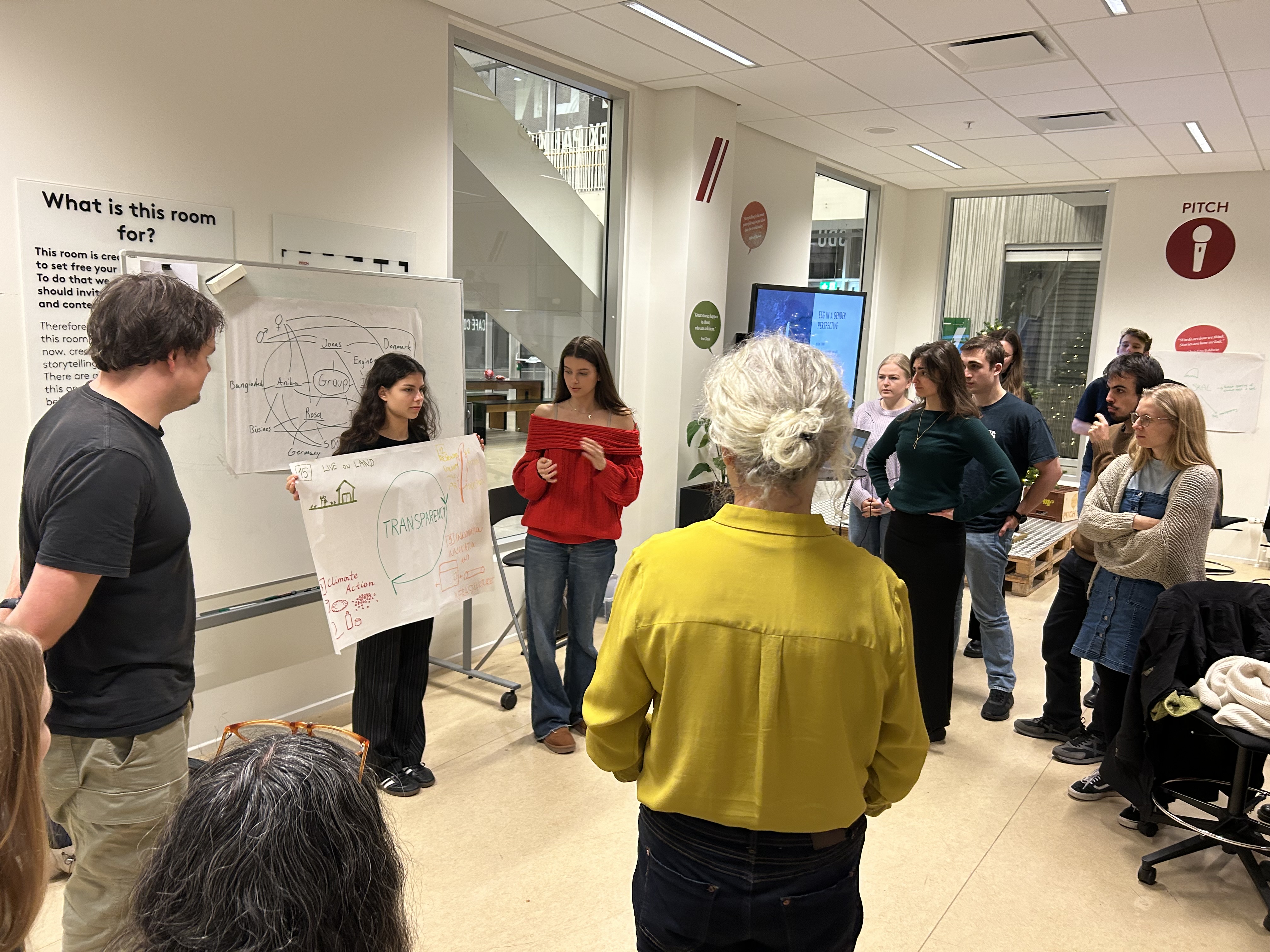
On 13th December 2025, GAIA CoP facilitator Ella Fegitz organised a training session on ESG for a group of young entrepreneurs participating in the Below Zero programme at the University of Southern Denmark.
Below Zero is a talent programme in green entrepreneurship led by the Research and Innovation Organisation at the University. Through the programme, students interested in environmental sustainability are equipped ‘with the right tools to create a climate startup, to understand and act on sustainability, and develop innovative solutions to help the world reduce its carbon footprint’. Climate startups are to come up with an innovativ e product or a service that either removes or reduces CO2 emissions.
We were delighted to participate in the programme by delivering a workshop on ESG, with a specific focus on the strategic integration of a social sustainability aspect into innovation. Iris Rittenhofer, PhD, works as a special consultant at the SDU Gender Equality Team. She shared her expertise on gender diversity, sustainability and ESG reporting with the climate entrepreneurs.
ESRS for Inclusive Business Models
The training session began by contextualising green entrepreneurship in the societies they are affecting. The EU developed the Corporate Sustainability Reporting Directive effective from January 2023. CSRD is to enforce companies’ active contributions to a green transition. By defining sustainability standards for gender and diversity, EU has strategically mainstreamed equal pay and equal opportunities into societal transition. Reporting on the subject areas of Environment, Social and Governance requires compliance with European Sustainability Reporting Standards ESRS. ESG-reporting calls for large companies and listed SMEs to add a social sustainability dimension to business as usual.
Iris continued the session by proposing a social value-based development of climate startups, turning the European sustainability reporting standards upside-down. Indeed, while in the current EU policy framework startups are not obliged to comply with standardised ESG reporting requirements, ESRS for the social dimension can be used as a source of inspiration for business model innovation. An inclusive business model integrates a socially innovative dimension into the successful creation and delivery of sustainable value.
‘Gender and diversity’ is the most developed D&I disclosure (https://link.springer.com/chapter/10.1007/978-3-031-78999-1_4). Gender and diversity inclusion denotes the inclusion of gender and diversity criteria in every action you take in designing and building a climate startup: when you test your ideas for a product or service, look for partners, request business expertise, hire employees, look for collaborators or think of your potential end users and consumers.
Inclusive business models can contribute to the sustainable reconstruction of society. Paraphrasing successful entrepreneur André Jaque: the crises we are facing are cracks emerging from intersecting paradigms such as carbonization, technocracy and patriarchy (https://channel.louisiana.dk/video/andr%c3%a9s-jaquewe-reconstruct-societies; accessed January 13th 2026 ). Inclusive business models have the potential to drive the environmental sector beyond capitalizing on climate crises.
The Connection Between Gender Equality and Sustainable Entrepreneurship
We strongly believe that exposing the young entrepreneurs participating in Below Zero to inclusive business models provides climate startups with an additional competitive edge. With the CSRD, EU redirects finance flows towards a green transition of society. Climate investment is expected to reach 23 trillion Euros. The European Investment Bank (EIB) is reported to maximize its return on investment by integrating a gender lens. This is because women are more likely to start a sustainable business than their male counterparts. By strategically investing in female startups, EIB expects to boost the positive impact of its climate investments (https://eige.europa.eu/newsroom/news/why-gender-equality-silver-bullet-meaningful-climate-action; accessed January 13th 2026).
It was a privilege to discuss the theme of gender and diversity as driver of sustainable business model development with the Below Zero participants and a pleasure see young entrepreneurs engage with issues of social sustainability in the green economy. We are looking forward to continuing our collaboration with Below Zero towards making the intersection of social and climate innovation a key driver of the green transition.


