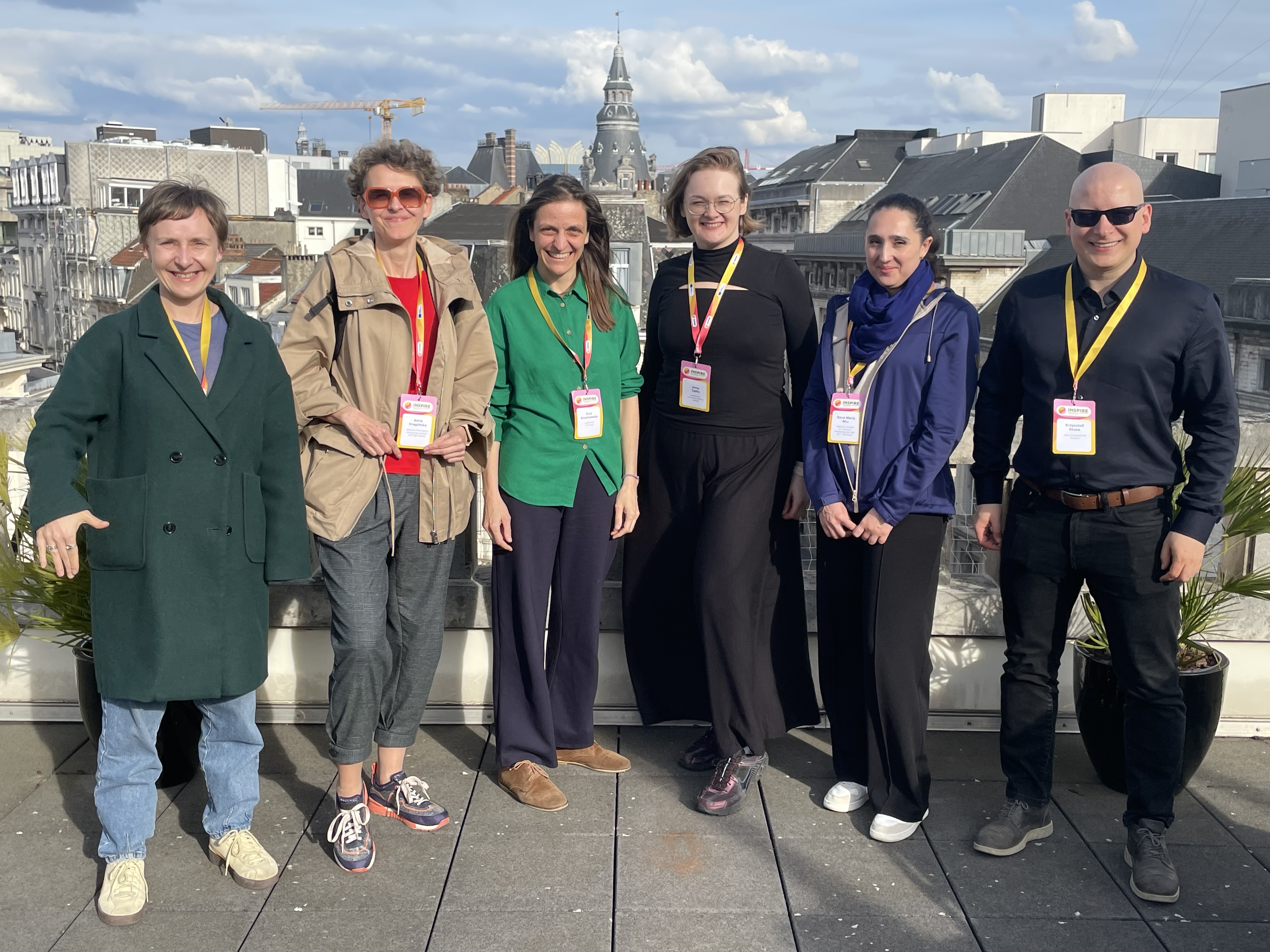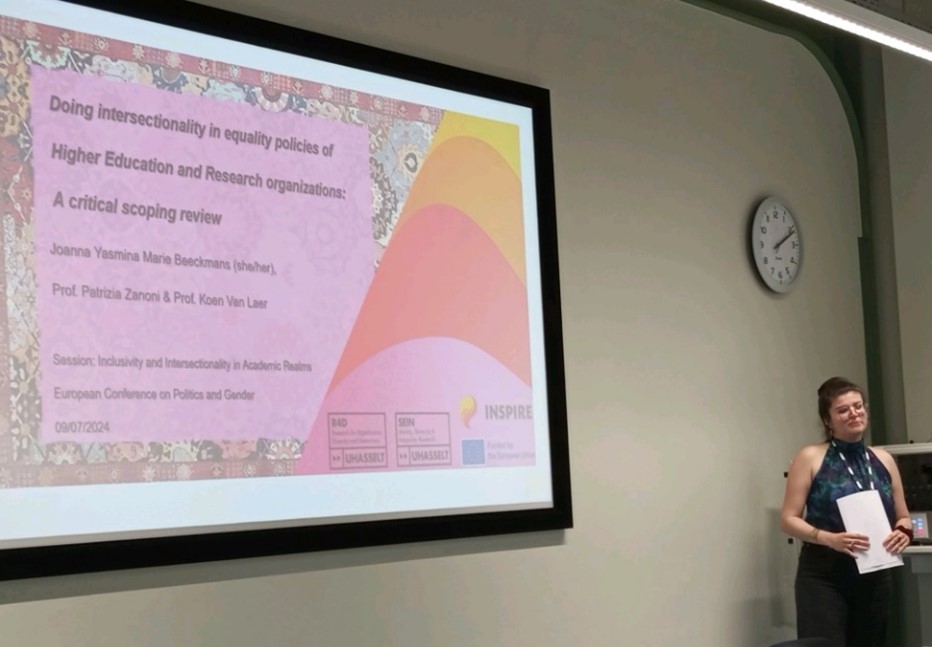
A few weeks ago, our Knowledge & Support Hub (KSH) on Intersectionality participated in the European Conference of Politics and Gender in Ghent. Here, Joanna Beeckmans from Hasselt University presented her research on intersectional equality policies in Higher Education and Research organizations (HE&R). This critical scoping review contributes to addressing the lack of understanding on how intersectionality can inform institutional policymaking. The paper also aligns with numerous calls in the conference and by policymakers to operationalise intersectionality to foster inclusive R&I policies.
The promise of intersectional equality policies is to work towards transformative policies that address intersecting inequalities, to overcome siloed policy approaches and to enhance the self-representation of those who currently experience a 'policy invisibility' in HE&R.

The reviewed articles:
(1) mostly capture the experiences of (in)equality of intersectional minoritised students and staff foregrounding the need for representational, experiential and academic. recognition in policies (e.g. tackling aggressions and enforcing a shared responsibility)
(2) To a lesser extent, they analyse the content of current equality policies and identify the need for intersectional accountability measures and evidence-based knowledge (e.g. data collection in action and not as an excuse for inaction).
(3) Finally, a few articles reflect on how intersectionality as a social-justice approach and as coalition-building among stakeholders can foster structural change.
This review argues that a political intersectional knowledge gap currently hampers the design and implementation of effective intersectional equality policies. Future research needs to build on this literature by analysing the whole organisational process of designing, governing, implementing and evaluating (intersectional) equality policies and practices in place. This holistic approach would inform current equality policies, such as GEPs and EDI measures which are often separated in siloed, single-axis policies, to overcome its compartmentalisation and hierarchisation of inequality axes and to work transformative and integrative.
By: Joanna Beeckmans, Hasselt University